Wednesday, November 14, 2012

Example Landmark Supreme Court Cases


Civil Rights:
Dred Scott v. Sandford (1857) - held that people of African decent were slaves and thus are not protected by the Constitution. Overruled by the 14th Amendment Citizenship Clause, "all persons born or naturalized in the United States, and subject to the jurisdiction thereof, are citizens of the United States..."

Plessy v. Ferguson (1896) - held that states had the right to create "seperate but equal" facilities for persons of African descent.

Brown v. The Board of Education (1954) - held that Plessy v. Ferguson was unconstitutional. States were no longer allowed to segregate students based on race.

Abortion:
Roe v. Wade (1973) - held that the Constitution guarantees a woman's right to privacy in relation to their bodies. Abortion was legalized.

Criminal Rights:
Gideon v. Wainwright (1963) - held that states must pay for an attorney for any person accused of criminal misconduct in trial proceedings.

Escobedo v. Illinois (1963) - held that persons suspected of criminal misconduct have the right to an attorney in an interrogation.

Miranda v. Arizona (1966) - held that any person interrogated must be made fully aware of their right to an attorney and their right to remain silent.

Brown v. Mississippi (1936) - held that a criminal confession is not valid if obtained through the use of violence.

Judicial Review:
Marbury v. Madison (1803) - held that the Judiciary has the right to interpret legislation.

Intelligent Design:
Kitzmiller v. Dover Area School District (2005) - held that teaching intelligent design in public schools is a violation of the 1st amendment's freedom of religion clause, and thus illegal.


Tuesday, November 6, 2012

The Soviet Union

The Russian Revolution occurred during World War 1 in 1917. When the Russians were fighting the Central Powers in Europe, the home front was disintegrating. While fighting the war, the Russian leadership consisted of a Tsar that controlled all of the power and wealth in the country. As a result, there were large groups of Russians that were unhappy with the leadership. V.I. Lenin, the main leader of the opposition to the Tsar, would lead a successful revolution and create the first Communist country based upon the teachings of Karl Marx. The Soviet Union would later become a world super power, even challenging the United States in technology and arms. By 1990 the Soviet Union collapsed, leaving the remaining world super power, the United States, to move forward and make the planet safe for democracy and global business.
The Romanov Family w Tsar Nicholas II
They were all executed.
V.I. Lenin Leader of the Russian Communist Revolution
U.S.S.R. - Union of Soviet Socialist Republics
Although short lived as a government (1917-1990), the Soviet Union had some notable historical accomplishments worthy of mention. First, the Soviet Union created the first functioning Communist country where the government attempted to create a society where its citizens own the means to production, thus eliminating economic inequality. Or in other words, the Communist government eliminated private property and forced all citizens to cooperate for the benefit of the nation. Second, the Soviet Union spilled more blood in World War 2 than any other country to defeat Hitler and Nazi Germany. In 1942, Hitler's armies entered the Soviet Union under Operation Barbarossa to acquire land for the Germans. The Soviet leader, Stalin at this time, was able to rally the Russians and others to stop the Nazi onslaught. (Making the United States and Soviet Union temporary allies). Next, the Soviet Union had put both the first satellite (Sputnik) in space along with the first man (Yuri Gagarin) in space. Finally, the Soviet Union competed with the United States throughout the Cold War. On several occasions the United States and the Soviet Union nearly came to global thermonuclear war. During the 1980's United States President Ronald Reagan spoke his famous words, "Mr. Gorbachev, Bring down this wall." The quote echoed the struggle of the people under the Communist system. Thankfully, cooler heads prevailed and the Soviet Union peacefully collapsed in 1990, thus creating several new countries and ending the Cold War.
Soviet Union Communist Government

Nazi Invasion of Soviet Union - Operation Barbarossa
Stalin v. Hitler (World War 2)

Battle of Stalingrad - Soviet Union Victory
 Soviet Union Flag Over Berlin, Germany
Sputnik - First Satellite in Space - U.S.S.R.
Yuri Gagarin - First Human in Space - U.S.S.R.
Berlin Wall and the Collapse of European and Russian Communism
"Mr. Gorbachev, Bring Down This Wall!" - Ronald Reagan
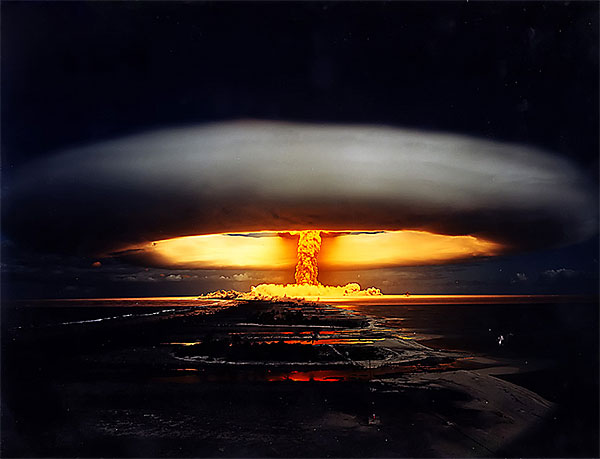
The Consequences of a Hot War Avoided

Thursday, November 1, 2012

World War 1

At the beginning of the 20th Century (1900's) the powerful nations of Europe started upon aggressive policies towards one another. England, France, Germany, Russia, and others were using their strengths to conquer lands overseas and dominate regions in Europe. These countries were competing to acquire areas around the globe for raw materials to support their industrial growth. As a result, war became inevitable. World War 1, originally called the Great War because there wasn't a World War 2 yet, had its foundations with the struggle for advanced nations to maintain industrial output at the beginning of the 1900's. The competing countries began to make alliances, which would be the reasoning behind why the war became a "World" war.

Tangled Alliances
The European governments were beginning to feel uneasy with the advances in opponents' industry and technology. Consequently, the major European powers began to ally with other nations. Below is a basic summary of the two main alliances of World War 1.
The war dragged on into a stalemate, or in other words, neither side was winning. Trench warfare, the machine gun, the tank, and the airplane were all new technologies that made both sides extremely well prepared for defensive positioning. 
Trench Warfare


Machine Gun


Tank


Airplane


After several years of hard fighting some developments occurred which allowed the Triple Entente countries to take the advantage. In 1917, the Russians left the war to complete their Communist Revolution at home. With the loss of such an important ally, the people of France and England were struggling along the Western Front. Because of German submarine attacks on United States shipping and the interception of the Zimmerman Telegram (A letter from Germany to Mexico asking the Mexican Government to attack the United States) the United States joined the war on the side of England and France. With fresh troops and supplies the war was won and Germany was forced to surrender by signing the Treaty of Versailles.

Submarine Warfare


Zimmerman Telegram


Monday, October 29, 2012

The Industrial Revolution

"The Industrial Revolution is the name historians have given to the period in history when there was a large and rapid change in the way things were made. This meant that instead of things being hand made in small workshops, they were made more cheaply in large quantities by machines in factories.

Many people began to move from an agricultural based life in the country to the towns where the factories offered more and better paid work."
- Wikipedia (Simple English)
The Industrial Revolution first occurred in England during the 1700's. Because of advancements in agricultural techniques, the English were able to produce an abundance of food. The additional food reserves allowed workers to spend time producing goods that were not survival necessities. Inventors found new techniques to produce fancier clothing and other goods at a quickened pace. As a result, a large industry grew to make textiles and cloth. Soon factories sprang up across England. Industrialization was taking root in England, which soon resulted in the accumulation of vast amounts of power and wealth. Industrialization caused nations to seek out new territories to fuel their factories with raw materials, thus giving rise to the Age of Imperialism.

The Agricultural Revolution in England during the 1700's produced vast amounts of additional food. By using enclosures, the English were able to divide lands to more effectively control crop growth. In addition, the English had several inventions which helped further the advancement of agricultural techniques. For example, the seed drill, invented by Jethro Tull, allowed farmers to plant seeds at an increased rate. Other inventions, such as the cotton gin, invented by Eli Whitney, soon followed. The consequence for these improved agricultural techniques was the production of massive amounts of additional food stores. The average Englishman no longer needed to spend time acquiring food for survival. People were becoming free to pursue other activities with their time.


With a growing labor force, England's citizens began to move to the cities or urbanized areas for work in factories. Wages in the factories were enough so that workers could purchase their food, clothing, and shelter. Cities and factories grew at an astonishing rate. Soon smoke stacks, large shipping vessels, and big business became the routine in England.

What made England the first to industrialize? England had several factors which allowed it to take the lead in industrialization. First, England had an abundance of raw materials at home i.e. coal and timber. The English could use the coal as fuel and the timber as building material. Second, the English developed cultural and 
financial systems that promoted economic and industrial growth. Banking systems and a solid supply of recognized currency allowed for the fair valued trade which was lacking in other parts of the world. Finally, England had a natural transportation advantage. Multiple navigable rivers allowed the English to transport goods long distances by shipping. Trains were not invented yet, so shipping was the only method available for moving large quantities of goods to market.

Industrialization soon spread across Western Europe and to North America. These nations began to compete internationally for raw materials. Latin America, Asia, and Africa all became hunting grounds for the large and powerful industrialized nations. This era is called the Age of Imperialism or Colonization. Although the industrialized nations found success during this era, the colonized regions were typically mistreated and found little profit or benefit from the colonial arrangement.

Tuesday, October 23, 2012

Ancient Rome

Germanic Tribesmen Fighting Roman Soldiers in Central Europe
Ancient Rome was a civilization that flourished in the Mediterranean region approximately 450 years before Christ and continued for several hundreds of years after the Crucifixion of Christ. It was one of the most successful republics and empires in the history of the world. Its impact is found in many cultural and institutional organizations in the Western World today. The Ancient Romans contributed much to the modern world. For example, the use of a clearly written code of laws came from the Ancient Roman's "Twelve Tables." Furthermore, the Ancient Romans used democratic forms of government during the Republican Period. Government powers were separated and a Senate was created to maintain the day-to-day functions of the State. With the efficient use of the Democratic structure the Ancient Romans used their collective reasoning and military prowess to dominate the European world 2000 years ago. By building aqueducts and complex engineered roads the Ancient Romans maintained effective control over its extensive lands for hundreds of years. The spread of Christianity and constant barbaric invasions caused the decline and fall of the Roman Empire.


After the conquering and assimilation of the Ancient Greeks, Rome embarked upon several periods characterized by differing political ideologies. Ancient Rome was originally ruled by Kings, thus making it an early monarchy. After the rise and fall of many rulers, Ancient Rome became a Republic. The Roman Republic separated its government powers and created a Senate. These reforms expanded the power of the citizenry making Ancient Rome a model for later governments around the world.

Around the time of Christ, Judea (modern day Israel / Palestine) was ruled by the Romans. Jesus Christ, a Jewish Carpenter, gathered a following of people. As a religious leader Jesus' influence grew over peoples of Judea began to worry the ruling Romans. As a result, Pontius Pilate sentenced Jesus to death by crucifixion. The crucifixion of Christ by the Ancient Romans solidified the Christian following thus creating the world's largest religion. Some historians even argue that the spread of Christianity was the main force behind the decline of the Roman Empire.


Roman Republic
After the dissolution of the Roman Republic, Rome became an Empire. The Roman Empire was ruled by a an autocracy or government where power is concentrated in an individual's hands. Even though the Roman Empire did not utilize the Senate and other Republican ideologies it did enjoy success for hundreds of years. Eventually however, the Roman empire became unstable and eventually disintegrated leaving fractured pieces of its rule all over Europe and western Asia.
Roman Soldiers

Friday, October 19, 2012

Ancient Greece


Ancient Greece was a highly successful civilization that existed around the Mediterranean Sea centuries before the birth of Christ. This civilization has influenced modern governments, 2,000 years later, similar to the one which is used here in the United States. A democratic government relies on its people or citizens to vote and participate in politics. In other words, the people control the government through the use of representatives and through the use of a vote. To better understand our democratic roots it is important to start with historical developments in Ancient Greece - the first civilization to use a democratic style government.


Ancient Greece existed from approximately 750 years B.C. (Before Christ) and was conquered and assimilated into Ancient Rome at 146 B.C. During the 600 years that Ancient Greece existed there were 3 major periods. Historians divide the three periods into Archaic Greece, Classical Greece, and Hellenistic Greece.
Archaic Greece was a period that saw the beginnings of Ancient Greek culture. Classical philosophy, art, mythology, and academics find their roots in this time period. Furthermore, the rise of the Ancient Greek city states, called a Polis, similarly have their foundations during this period. The many Greek cities during this time were not politically united, which as a consequence, caused many distressed persons to move to neighboring lands to form colonies. This resulted in the spread of the basic Archaic Greek culture across the Aegean Sea.

Classical Greece was a period which most heavily influenced the modern western world. More specifically, Classical Greek art, government, science, philosophy and architecture is found throughout modern countries such as the United States, England, France, and Germany. The framers of the United States Constitution were well versed in the works and deeds of Cleisthenes, Solon, Plato, Aristotle, Socrates, Thales, Anaximander, Anaximenes, Homer, Herodotus, and many other famous Ancient Greek scholars. It is a miracle of World History that the cultural themes found in Classical Greece, several hundred years before the birth of Christ, are found in today's western democratic governments 2,000 years later.


Classical Greece reached its height with the conquests of Alexander the Great. Alexander, a military ruler from Macedonia, spread Greek culture across the Persian Empire (modern-day Iran) into northern India and as far north as some of today's central Asian Republics. Furthermore, Alexander's conquests also ranged throughout the Mediterranean Sea region. One of the most famous conquerors in the history of the world, Alexander III of Macedon left the Classical Greek legacy across much of Asia, North Africa, and Europe.


After Alexander the Great Ancient Greece entered the Hellenistic Period. This era witnessed the decline of centralized Greek authority and allowed the slow transition into a time when the Ancient Romans would conquer and assimilate the Greeks. Although defeated by the Ancient Romans, Greek culture continued to thrive throughout the Ancient Roman period. The Ancient Romans utilized much of what the Greeks learned, so much so, that even the Roman Gods were copies of the Gods of the Ancient Greeks. 

Tuesday, October 9, 2012

Introduction to European Geography

European history has had the largest impact on the western world to date. Much of our everyday lives owe themselves to the events and history which occurred throughout Europe over the past 2,500 years. Students must gain a basic understanding of the nations of Europe before proceeding to lessons relating to the history of Europe.
1. Germany
2. France
3. Spain
4. Portugal
5. Italy
6. Greece
7. Poland
8. Turkey
9. Russia (Soviet Union)
10. England / Britain / U.K.


Europe is a continent made up of many peninsulas. The Atlantic Ocean, Mediterranean Sea, and 2 Straits have created a highly strategic region on Earth. Many European cultures used water ways to trade products and ideas. Religion, science, architecture, government, language, art, military technology and et cetera were all part of a continental melting pot of human activity found in Europe.
1. Thames River
2. Rhine River
3. Vistula River
4. Danube River
5. North Sea
6. English Channel
7. Mediterranean Sea
8. Black Sea
9. Adriatic Sea
10. Aegean Sea
A. Strait of Gibraltar
B. Bosporus Strait