Monday, October 29, 2012

The Industrial Revolution

"The Industrial Revolution is the name historians have given to the period in history when there was a large and rapid change in the way things were made. This meant that instead of things being hand made in small workshops, they were made more cheaply in large quantities by machines in factories.

Many people began to move from an agricultural based life in the country to the towns where the factories offered more and better paid work."
- Wikipedia (Simple English)
The Industrial Revolution first occurred in England during the 1700's. Because of advancements in agricultural techniques, the English were able to produce an abundance of food. The additional food reserves allowed workers to spend time producing goods that were not survival necessities. Inventors found new techniques to produce fancier clothing and other goods at a quickened pace. As a result, a large industry grew to make textiles and cloth. Soon factories sprang up across England. Industrialization was taking root in England, which soon resulted in the accumulation of vast amounts of power and wealth. Industrialization caused nations to seek out new territories to fuel their factories with raw materials, thus giving rise to the Age of Imperialism.

The Agricultural Revolution in England during the 1700's produced vast amounts of additional food. By using enclosures, the English were able to divide lands to more effectively control crop growth. In addition, the English had several inventions which helped further the advancement of agricultural techniques. For example, the seed drill, invented by Jethro Tull, allowed farmers to plant seeds at an increased rate. Other inventions, such as the cotton gin, invented by Eli Whitney, soon followed. The consequence for these improved agricultural techniques was the production of massive amounts of additional food stores. The average Englishman no longer needed to spend time acquiring food for survival. People were becoming free to pursue other activities with their time.


With a growing labor force, England's citizens began to move to the cities or urbanized areas for work in factories. Wages in the factories were enough so that workers could purchase their food, clothing, and shelter. Cities and factories grew at an astonishing rate. Soon smoke stacks, large shipping vessels, and big business became the routine in England.

What made England the first to industrialize? England had several factors which allowed it to take the lead in industrialization. First, England had an abundance of raw materials at home i.e. coal and timber. The English could use the coal as fuel and the timber as building material. Second, the English developed cultural and 
financial systems that promoted economic and industrial growth. Banking systems and a solid supply of recognized currency allowed for the fair valued trade which was lacking in other parts of the world. Finally, England had a natural transportation advantage. Multiple navigable rivers allowed the English to transport goods long distances by shipping. Trains were not invented yet, so shipping was the only method available for moving large quantities of goods to market.

Industrialization soon spread across Western Europe and to North America. These nations began to compete internationally for raw materials. Latin America, Asia, and Africa all became hunting grounds for the large and powerful industrialized nations. This era is called the Age of Imperialism or Colonization. Although the industrialized nations found success during this era, the colonized regions were typically mistreated and found little profit or benefit from the colonial arrangement.

Tuesday, October 23, 2012

Ancient Rome

Germanic Tribesmen Fighting Roman Soldiers in Central Europe
Ancient Rome was a civilization that flourished in the Mediterranean region approximately 450 years before Christ and continued for several hundreds of years after the Crucifixion of Christ. It was one of the most successful republics and empires in the history of the world. Its impact is found in many cultural and institutional organizations in the Western World today. The Ancient Romans contributed much to the modern world. For example, the use of a clearly written code of laws came from the Ancient Roman's "Twelve Tables." Furthermore, the Ancient Romans used democratic forms of government during the Republican Period. Government powers were separated and a Senate was created to maintain the day-to-day functions of the State. With the efficient use of the Democratic structure the Ancient Romans used their collective reasoning and military prowess to dominate the European world 2000 years ago. By building aqueducts and complex engineered roads the Ancient Romans maintained effective control over its extensive lands for hundreds of years. The spread of Christianity and constant barbaric invasions caused the decline and fall of the Roman Empire.


After the conquering and assimilation of the Ancient Greeks, Rome embarked upon several periods characterized by differing political ideologies. Ancient Rome was originally ruled by Kings, thus making it an early monarchy. After the rise and fall of many rulers, Ancient Rome became a Republic. The Roman Republic separated its government powers and created a Senate. These reforms expanded the power of the citizenry making Ancient Rome a model for later governments around the world.

Around the time of Christ, Judea (modern day Israel / Palestine) was ruled by the Romans. Jesus Christ, a Jewish Carpenter, gathered a following of people. As a religious leader Jesus' influence grew over peoples of Judea began to worry the ruling Romans. As a result, Pontius Pilate sentenced Jesus to death by crucifixion. The crucifixion of Christ by the Ancient Romans solidified the Christian following thus creating the world's largest religion. Some historians even argue that the spread of Christianity was the main force behind the decline of the Roman Empire.


Roman Republic
After the dissolution of the Roman Republic, Rome became an Empire. The Roman Empire was ruled by a an autocracy or government where power is concentrated in an individual's hands. Even though the Roman Empire did not utilize the Senate and other Republican ideologies it did enjoy success for hundreds of years. Eventually however, the Roman empire became unstable and eventually disintegrated leaving fractured pieces of its rule all over Europe and western Asia.
Roman Soldiers

Friday, October 19, 2012

Ancient Greece


Ancient Greece was a highly successful civilization that existed around the Mediterranean Sea centuries before the birth of Christ. This civilization has influenced modern governments, 2,000 years later, similar to the one which is used here in the United States. A democratic government relies on its people or citizens to vote and participate in politics. In other words, the people control the government through the use of representatives and through the use of a vote. To better understand our democratic roots it is important to start with historical developments in Ancient Greece - the first civilization to use a democratic style government.


Ancient Greece existed from approximately 750 years B.C. (Before Christ) and was conquered and assimilated into Ancient Rome at 146 B.C. During the 600 years that Ancient Greece existed there were 3 major periods. Historians divide the three periods into Archaic Greece, Classical Greece, and Hellenistic Greece.
Archaic Greece was a period that saw the beginnings of Ancient Greek culture. Classical philosophy, art, mythology, and academics find their roots in this time period. Furthermore, the rise of the Ancient Greek city states, called a Polis, similarly have their foundations during this period. The many Greek cities during this time were not politically united, which as a consequence, caused many distressed persons to move to neighboring lands to form colonies. This resulted in the spread of the basic Archaic Greek culture across the Aegean Sea.

Classical Greece was a period which most heavily influenced the modern western world. More specifically, Classical Greek art, government, science, philosophy and architecture is found throughout modern countries such as the United States, England, France, and Germany. The framers of the United States Constitution were well versed in the works and deeds of Cleisthenes, Solon, Plato, Aristotle, Socrates, Thales, Anaximander, Anaximenes, Homer, Herodotus, and many other famous Ancient Greek scholars. It is a miracle of World History that the cultural themes found in Classical Greece, several hundred years before the birth of Christ, are found in today's western democratic governments 2,000 years later.


Classical Greece reached its height with the conquests of Alexander the Great. Alexander, a military ruler from Macedonia, spread Greek culture across the Persian Empire (modern-day Iran) into northern India and as far north as some of today's central Asian Republics. Furthermore, Alexander's conquests also ranged throughout the Mediterranean Sea region. One of the most famous conquerors in the history of the world, Alexander III of Macedon left the Classical Greek legacy across much of Asia, North Africa, and Europe.


After Alexander the Great Ancient Greece entered the Hellenistic Period. This era witnessed the decline of centralized Greek authority and allowed the slow transition into a time when the Ancient Romans would conquer and assimilate the Greeks. Although defeated by the Ancient Romans, Greek culture continued to thrive throughout the Ancient Roman period. The Ancient Romans utilized much of what the Greeks learned, so much so, that even the Roman Gods were copies of the Gods of the Ancient Greeks. 

Tuesday, October 9, 2012

Introduction to European Geography

European history has had the largest impact on the western world to date. Much of our everyday lives owe themselves to the events and history which occurred throughout Europe over the past 2,500 years. Students must gain a basic understanding of the nations of Europe before proceeding to lessons relating to the history of Europe.
1. Germany
2. France
3. Spain
4. Portugal
5. Italy
6. Greece
7. Poland
8. Turkey
9. Russia (Soviet Union)
10. England / Britain / U.K.


Europe is a continent made up of many peninsulas. The Atlantic Ocean, Mediterranean Sea, and 2 Straits have created a highly strategic region on Earth. Many European cultures used water ways to trade products and ideas. Religion, science, architecture, government, language, art, military technology and et cetera were all part of a continental melting pot of human activity found in Europe.
1. Thames River
2. Rhine River
3. Vistula River
4. Danube River
5. North Sea
6. English Channel
7. Mediterranean Sea
8. Black Sea
9. Adriatic Sea
10. Aegean Sea
A. Strait of Gibraltar
B. Bosporus Strait   


Thursday, September 27, 2012

Climate and Weather

Types of Weather
People commonly discuss weather as a topic while making small talk. Our day-to-day experiences are affected by weather. Weather has had an impact on history and has an impact on life today. Weather changes as a result of differing causes. Atmospheric currents, ocean currents, seasonal variation, location, and possibly even human activities, all have an impact on the weather. How is weather different from climate? Climate is the overall trend of weather patterns, over time, in a given region; whereas weather is the current atmospheric status in a given region. Or in other words, weather is what is happening now and climate is better defined as what happens throughout the year.


Climate ranges from hot to cold and from dry to wet depending upon your location on Earth. Climate trends stay relatively predictable. For example, in the Central San Joaquin Valley we experience hot dry summers, yet our winters are typically characterized with cold, wet, and most often foggy weather. Climate zones are found all over the Earth. Climate zones, however, do not always indicate extreme weather patterns.

Extreme weather happens on Earth everyday. Tornadoes commonly occur over the Midwestern United States; whereas Tropical Cyclones threaten the Eastern United States annually. Southeast Asia typically struggles with extreme tropical weather patterns, yet East Central Africa is currently experiencing severe drought conditions. Below are some examples of extreme weather and their causes.

Tornadoes are caused by a mixture of warm moist air and cool dry air. These types of air masses collide and create supercell thunderstorms. These powerful weather systems are the fuel which gives tornadoes their destructive power. 95% of the tornadoes on Earth happen here in the United States. The cool dry air sweeping down from the Canadian Rockies combines with the warm moist air from the Gulf of Mexico causing extreme weather patterns every year over the United States.


Are we at risk for a Tornado?


Tropical Cyclones, most often called Hurricanes, form all across the mid latitudes over the oceans. Warm ocean currents give strength to tropical atmospheric depressions giving birth to rotating storms up to 700 miles wide. These storms cause billions of dollars in damage every year across the globe. Hurricane Katrina destroyed much of New Orleans and more recently, Super Storm Sandy, a combination of a tropical cyclone and a nor'easter, wreaked havoc upon the North Eastern coast of the United States.  


Tropical Cyclone over the Gulf of Mexico

Tropical Cyclone Tracks; Notice the movement away from the Equator.


Thursday, September 13, 2012

Plate Tectonics and Continental Drift

250 Million Years of Continental Drift
The Earth is over 4.5 billion years old. Since that time the Earth has undergone significant changes. Continents appeared and shifted positions worldwide. At approximately 250 million years ago a supercontinent emerged from the ocean. This supercontinent is called Pangaea. Pangaea split apart and left us with the 7 continents that we are familiar with today. It's hard to believe that the continents move. With overwhelming scientific data however, we now understand not only where continents have been and where they are going, but also what causes the continents to move.


Plate Tectonics is the name for that which causes the Earth's surface to change. The constant currents of warm and hot swirling magma in the Earth's mantle force the large plates of the crust to move and rub against each other. Earthquakes, Tsunamis, are Volcanoes are all caused by Plate Tectonics. Since we live only on average about 72 years we have a difficult time observing Plate Tectonics in action. If we recorded the Earth for a quarter billion years and played it in fast motion, you would see a planet that is violently undergoing constant transformation i.e. huge volcanic explosions, disappearing landmasses and seas, massive earthquakes and enormous tsunamis. 


Plate Tectonics have three distinct types of boundaries. The first plate boundary type is Convergent. Two plates collide or converge with each other. On plate will usually dive under the other causing lift. Second, is the divergent plate boundary. A divergent boundary occurs when two plates split apart from each other. Usually a divergent boundary results in a depression or low laying region of the crust. Finally, there is the strike-slip or transform plate boundary. These boundaries are found when two plates are moving parallel to one another. Earthquakes and Volcanoes typically occur along plate boundaries.


Monday, September 10, 2012

The Earth Inside and Out

Over the past several decades, scientists have made many discoveries about the interior and exterior of the Earth. For millennia, Humans believed that the Earth was flat or that the Sun revolves around the Earth. These assumptions could not be further from the truth. Using geometry and scientific instruments the nature of our Solar System and the structure of the Earth has become evident. There are 8 major planets orbiting the Sun, our nearest star. The planets are named in the following order: Mercury, Venus, Earth, Mars, Jupiter, Saturn Uranus, Neptune.

Currently, none of the other planets are habitable for life as we understand it here on Earth. This fact is what makes Earth unique. Temperature, atmospheric composition, atmospheric pressure, magnetosphere, water, and other requirements all have to be met to sustain life. No other known planet has the same characteristics as Earth, and as a result, other planets can not sustain life. More specifically speaking, other planets are very inhospitable to life i.e. too hot, too cold, radiation, low or high atmospheric pressure, lack of oxygen or water, and etc. The amount of distress that the properties of other planets would inflict on the human body would be extreme. Death would be certain on any planet aside from the Earth.

The Structure of the Earth, at its most basic level, could be summarized in 4 major zones. First, the Earth has a dense Core. The Core is made up of heavier elements and is under an enormous amount of heat and pressure. The magnetic charge of the core creates a magnetosphere around the Earth, thus shielding us from solar, cosmic, and galactic radiation.


Magnetosphere


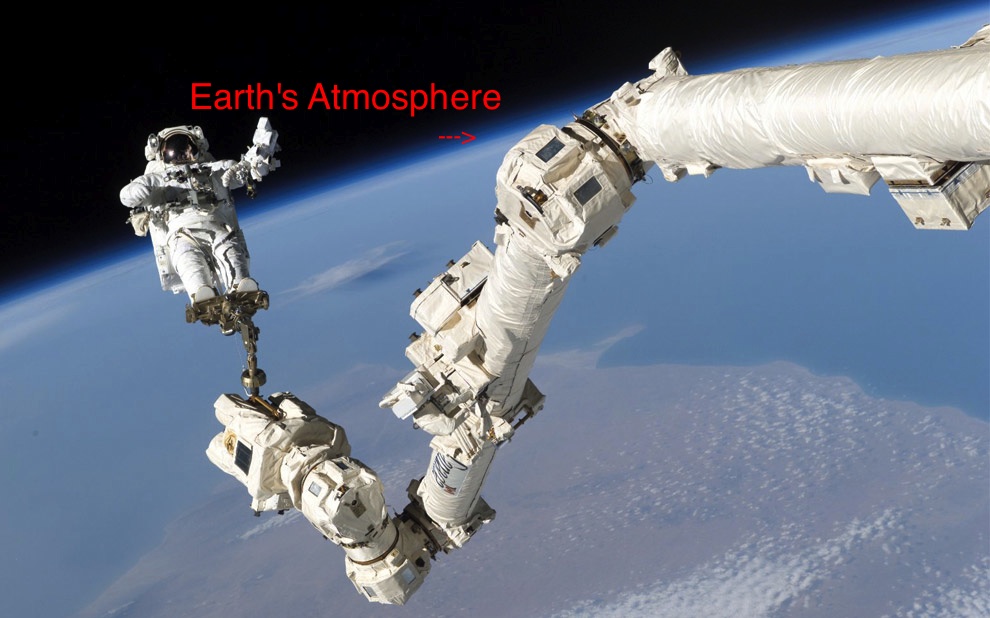
Next, the region just outside of the Core is called the Mantle. In the Mantle you have molten rock called Magma. Magma swirls around in the interior of the Earth and is the driving force behind plate tectonics, earthquakes, tsunamis, and volcanoes. The third layer of the Earth is the Crust. The entire Earth is covered by a dried layer of rock called the Crust. Occasionally Magma will spill through the Crust becoming Lava. Finally, the Earth is surrounded by an Atmosphere. The Atmosphere is an ocean of gas (air) that is made up of a specific recipe which supports life. For example, the 21% of Oxygen in our atmosphere allows animals to breathe and sustain metabolic processes. Too little Oxygen we couldn't breathe, whereas too much Oxygen would become flammable. There are other molecules in the Atmosphere, such as Carbon Dioxide, which supports plant growth.